Showing posts with label fly fishing stories. Show all posts

Tuesday, May 10, 2022

A Tale of Two Streams

After a recent weekend in which I had the rare opportunity to fly fish for trout on two consecutive days, I was left with two vastly different experiences and plenty to think about: the type of trout I caught, the challenges (or lack thereof) they presented, and the rewards (or lack thereof) of netting them. Yes, I’m talking about wild trout, native trout, and stocked trout, but not in a way that’s judgmental of anglers who target any of the three types; my goal is simply to relate the experience, sort through my thoughts, and better understand my own motivations as an angler. Feel free to come along for the ride. 

Brookie Heaven
On the first day, my wife and I took a long drive north to explore a favorite little-known trail through the woods where she enjoys photographing the flora and fauna and I enjoy fishing the beautiful small stream with a thriving native brook trout population that runs right along said trail. Equipped with my 1-weight Sage Dart and a dry-dropper rig, I was ready to begin a few hours of slow, stealthy, deliberate movement with delicate, precise casting and presentation to target finicky natives feeding in gin-clear spring-fed water where there are no second chances. 

Within five minutes I landed a small brookie that smashed my dry. Having quickly shaken off the skunk, I took a few moments to appreciate the idyllic beauty of my surroundings and the quiet of nature. In truth, I had gotten too excited after the first fish and snagged my rig in an overhanging branch on a water-loaded backhand cast; I should have bow-and-arrowed that one. Live and learn, forget, live and learn again, repeat, I guess.

Once I got back to business I worked a stretch of water that should have produced at least some action but didn’t. There were simultaneous hatches of black caddis, blue-winged olives, and little black stoneflies and I was using a caddis dry with a soft hackle pheasant tail dropper, effectively covering the caddis hatch and somewhat effectively imitating the stonefly nymphs that were crawling out of the water to emerge on the rocks along the bank. Attempting to crack the code, I switched out the caddis for a small olive parachute Adams with the dropper to see if the brookies were zeroed in on the olive hatch. Nothing. I then switched to my trusty big olive x-caddis, still with the dropper. Nothing. Given my past success with this tandem, I decided to stick with it and just work every bit of water to try and produce something. After carefully approaching a particularly promising plunge pool, I felt a slight bit of resistance on my backcast and pulled in the rig quickly to find I had broken off my dropper at the knot connecting the tippet to the hook bend of my dry fly. 

I always like to cover multiple columns of water with my drifts and rarely fish with only a dry, but I was feeling lazy so I casted the lone dry towards the middle of the pool to drift through the tail before moving up to the head. Within two seconds of a slow drift, the largest and most colorful native brookie I’d seen in that stream crushed the caddis and took off into the head of the pool, putting my 1-weight at full bend following the hookset. After netting and releasing that beautiful gem of a trout, I was elated not only at having caught such a specimen but also at having cracked the code: they were seeing my dropper tag and turning away. 

The Caddis Assassin
For the final hour on the water, my x-caddis was getting destroyed by brookie after brookie. Given the haphazard manner with which brookies strike dries, my insistence on using barbless hooks, and their talent for shaking off said hooks, I didn’t land many. However, not only was I overjoyed by the ones I had netted but I also felt completely recharged and uplifted by the whole experience. Whether I land four fish or forty, I always treasure my days on small mountain streams.

The next day, I changed up the scenery and style of fly fishing by Euro nymphing a larger (well, larger than what I fished the day before) rural freestone creek targeting wild brown trout in the 12-24” range. Even though the surroundings aren’t pristine and soothing, the stream itself is beautiful and the big wild browns it holds are worth the trade-off. In the past, this particular section has yielded some of my favorite browns and it’s always appealed to me because of its distance from stocking points and low pressure from anglers. Every so often the odd holdover rainbow will make the mile-plus trip downstream from the nearest stocking area, but it’s rare and they’re always caught in the upper portion of the three-quarter mile stretch I fish.

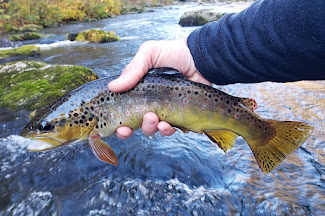
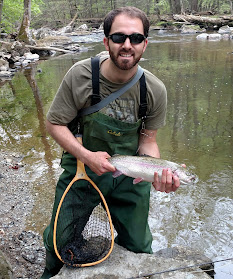
An old favorite wild brown
from this stream.
Prior entomological knowledge of this freestone gave me a fairly good idea of what to expect for mid-Spring nymph activity, which is traditionally heavy on baetis, stoneflies, and sulphurs. I always prefer fishing a big, heavy stone as my point fly so I went with a girdle bug/olive thread frenchie tandem to cover two of the three common nymphs. With no luck in the first two runs, I started to question my choice of point fly. I’ve had trouble with girdle bugs there in low, clear flows and though the water was up, it was as clear as I’d ever seen it. I decided if I fished the next spot (a pool of moderate depth with a riffle at the head) without any luck, then I’d switch. 

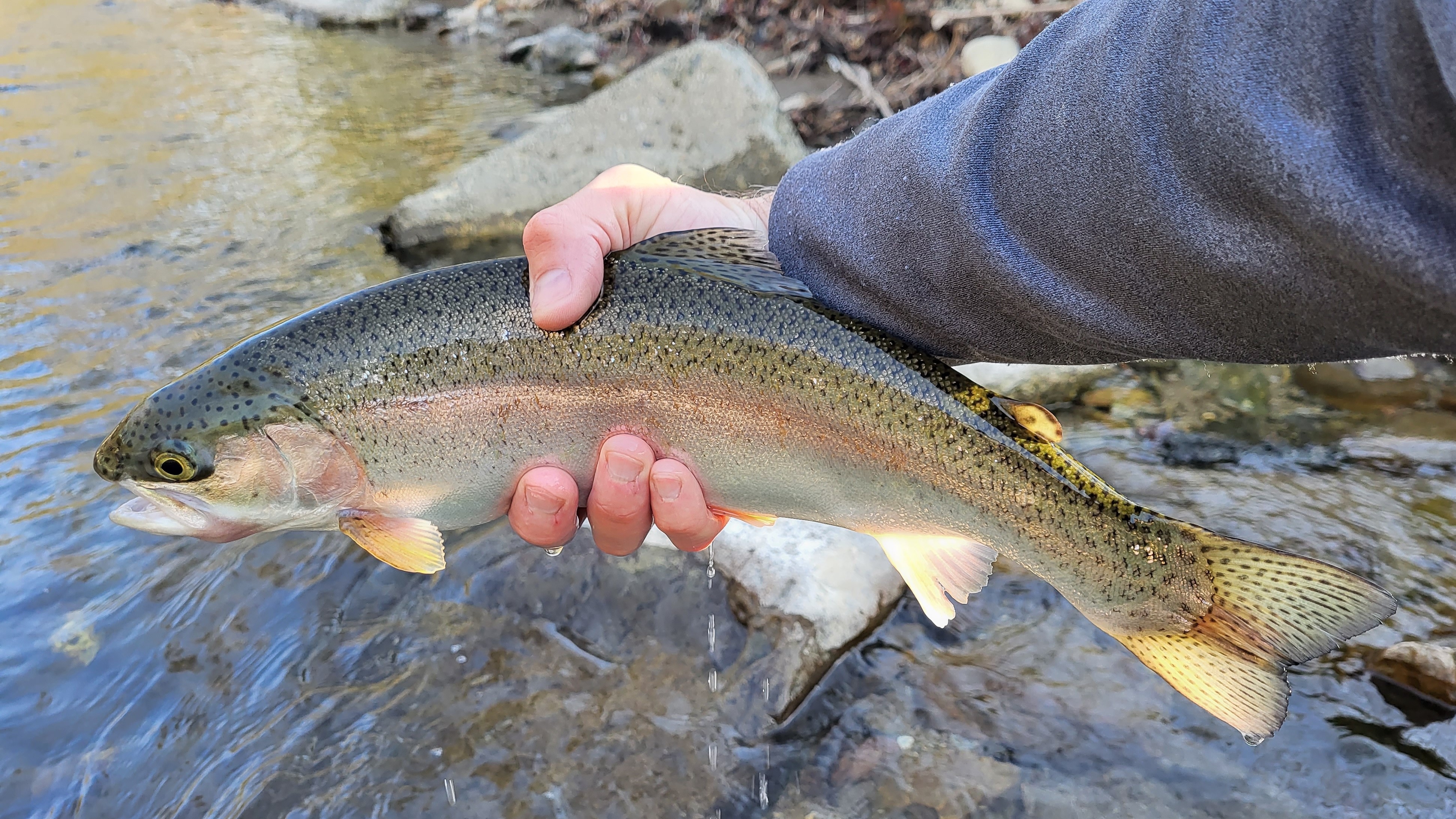
The slow water of the pool didn’t produce anything but I found what I was looking for in the riffle, or at least I thought I did. Seconds after hooking into a fish on my 10-foot, 2-weight ESN, what I hoped was a nice wild brown torpedoed out of the water to reveal itself as a fat, colorless stocked rainbow about a half-mile downstream from the lowest point I had ever caught one. After netting the stockie I was happy to end the skunk and learn that the trout took the dropper. I then switched to a heavier olive thread Frenchie as my point fly with a perdigon dropper just for fun. 

Olive Thread Frenchie
From that point on the action was consistent, but there was an alarming trend: within two hours of landing the first rainbow I netted eight more cookie-cutter, fat, hueless stocked fish all in the 14-inch range with the only variety being that a few of them were riddled with disgusting lesions, confirming my growing fear that the state had decided to extend their stocking boundary and choke out this wild trout oasis. A few moments after releasing rainbow number nine and moving to a run in which I’ve caught some of my favorite fish, I finally saw a gold flash after my hookset instead of silver. The brown I netted was beautifully colored, albeit somewhat diminutive, and reflected the rewards I knew the stream could yield. Hopeful for the final quarter-mile of water and what it might bring, I continued on, hitting a bit of a lull and of course catching the occasional stockie. 

When I turned around I decided to fish my way back to my vehicle by Euro nymphing a micro streamer to see if I could trigger that predatory response from some of the wild fish I knew were there. Nope. It just made the rainbows more aggressive. In one pool I took ten consecutive drifts through the same section and had six rainbows to net, two lost, and two missed hooksets from what were surely rainbows. Wild fish wouldn’t still be actively feeding after so much chaos. In the last hour I was just horsing in stockers half-hoping to lose them in the process, which I sometimes did.

One of too many...
By the end of a six-hour outing I had caught twenty stocked rainbows and one wild brown in what had always been a challenging stream. Some of my most memorable days consisted of landing fewer than five fish, but the quality of the trout were what made my day. While I enjoy and appreciate just being out on the water whether I catch or not, I relish the challenge and feeling of accomplishment that comes with wild and native trout. They’re smarter, stronger, more colorful, more discerning, more easily spooked, tougher to fight (and land), and are overall genetically superior to their inbred, pellet-fed contemporaries. When I left that stream I felt like I accomplished nothing and, despite having fun, it was all empty calories.   

There was a time when I was satisfied with catching stockies all day, but I moved past it. As an individual in fly fishing I decided I wanted to grow as an angler and there’s a wall one inevitably hits with stocked trout; I hit it about four years ago and since then the pursuit of wild and native trout has led me all over North America on an incredible journey that I wouldn’t change for anything. I’ll honestly take those 6-inch small stream native brookies over a 20-inch stocker any day, but that’s just me.

Thursday, March 17, 2022

The Promise of Adventure

 If you’ve read the title that means you’re already familiar with my favorite word in the English language: ADVENTURE. Yes, it’s a word that’s often overused and seen by many as a clichĂ©, but for me it’ll always have an underlying electricity to it; I’m drawn to it; it pops out at me whenever I see it. Many of my favorite stories in film and literature involve characters shaking off the banality of life and embracing adventure, whether it be Indiana Jones hopping on a Pan Am flight for Nepal to begin his search for the Lost Ark, Sherlock Holmes and John Watson speeding through the streets of London towards a crime scene in a single horse brougham carriage, or Dumas’s musketeers galloping on horseback all over France to save the kingdom. The anticipation of adventure, of unknown and potentially limitless possibilities is something that has never failed to excite me in narrative, but there was a time when I doubted that I would ever actually experience it in my life.  Then came my thirties.

"It's not the years...It's the mileage."
I often joke (actually, half-joke) that I basically modeled my adult life after Indiana Jones. Indy and I are a lot alike—except for the PhD—and the whole archeology thing—and the womanizing—and I haven’t killed a Nazi—yet. But other than that, we’re fairly similar; we’re both educators and we both lead double lives split between the formally dressed, professional facade and the never ending desire to break away from it and seek out adventure. He explores ancient ruins with a whip and a revolver, I explore streams with a fly rod and net. Same thing, sort of.

Though I’m not getting into a brougham or a biplane, I still experience that palpable excitement of the “and off we go'' stage every time I shift my vehicle into gear at 3:15am to head out into nature and explore a wild trout stream. The long drive in the dark on nearly empty highways only serves to build on the sense of an unknown outcome, which is at the heart of every adventure. There’s no way to know for sure what’s waiting out there on the water and while the worst part of the day may be losing a decent fish or not netting anything at all, it could also be a wildlife encounter or other mishap that I won’t walk away from; on the other hand the best part of the day could be landing a handful or solid trout or it could be fighting and landing the one I’ll vividly remember forever. The absence of guarantees in fly fishing might be off-putting for some, but it’s inextricable from the basic idea of an adventure; surety of success would destroy the experience.

"That belongs in a (stream)!"
While some may view it as childish, I love to keep my favorite adventure stories in mind when I’m fly fishing. It helps maintain the wonder and excitement of the moment to think that I’m not just watching or reading about other people’s tales of exploration, discovery, and danger, but that I’m out there experiencing my own. Fly fishing may not be about unearthing priceless artifacts, solving mysteries, or saving a kingdom, but when I manage to bring a beautiful gem of a wild trout out of the depths of a stream after cracking the code of what it was feeding on and then safely release it for future generations to enjoy, it feels pretty damn close.


Tuesday, February 15, 2022

Remembering Where You Started

This past November I accepted an invite from an Instagram friend to visit a well known and thriving wild trout fishery in Western Maryland. However, the night before I was to make the trip the friend was forced to cancel due to a pressing obligation. Despite the last minute curveball, the hotel was already booked and paid for two nights so I was going anyway. The next morning I packed up and drove Southwest, uneventfully fishing a few Southern Pennsylvania streams along the way and extending the six-hour drive to arrive at the hotel in the evening. Before going to sleep I studied the detailed essay my friend had written for me in his stead containing tips on access points and fly selection, forming a loose plan of attack.

A half-hour before first light the following morning I pulled up to one of the recommended access points. While I prefer fishing early to prevent being handicapped by other anglers spooking out runs, it’s a tactic that can be challenging on a new stream on account of the limited visibility making reading water and gauging depth difficult. However, I still managed to hook a few fish in deep water on bigger stonefly imitations before getting in my vehicle and moving on to nymph a nearby stretch of pocket water.

Entering the water again shortly after sunrise, I worked my way upstream through what I would later learn was a notoriously difficult section to wade, information for which my shins and ankles would have been thankful. With the sun up, the stonefly was no longer getting it done so I switched to an olive thread Frenchie and had consistent action fishing thoroughly from pocket to pocket. This particular river is known more for numbers than size so I was happy netting beautiful wild browns in the 6-12” range all morning. Around noon I reached the end of the section and walked back along a nearby road to save time and spare my shins further agony. While walking I reflected on the morning, on the beauty of the river and the fall foliage, on the colors and overall health of the brown trout I had caught, and on my general gratitude at being where I was and doing what I was doing on that particular day.

A beautiful, robust Maryland wild brown trout.
When I reached my vehicle I spotted an angler, a man in his mid-to-late-twenties, indicator nymphing a nearby plunge pool while a woman who I assumed was his girlfriend was walking along the bank taking in the scenery. I had planned to revisit the section I’d fished at first light in hopes of getting a better look at it so I proceeded to load my rod into the rod vault and stow my pack, during which I noticed the angler exiting the river and coming towards me. We greeted one another and he asked how I had fared so far. After briefly telling him about my morning I asked the same and he confessed, “To be honest, I’m fairly new to fly fishing and I normally fish streamers, so this is my first day nymphing and I’m having a hard time. Do you have any advice?”
As both an angler and an educator, I was impressed and refreshed by his humility and willingness to ask for help. Even though I’m introverted by nature, I lit up at the opportunity to help this guy get into fish any way that I could, so I eagerly took a look at his setup: a standard 9-foot/5-weight rod, a 9-foot/5x leader, a single nymph rig, and an indicator sitting about three-feet above the fly. I suggested that he move the indicator up the leader a few more feet, change out the point fly, add a dropper, and add weight. I helped him choose patterns from his box and gave him some split shot while showing where to add it to his tippet. I then pulled my Euro rod from the rod vault and showed him my tandem rig and Euro leader, explained the similarities and differences between the two styles, and stressed the importance of adjusting his indicator based on varying depths while keeping it in the same seam in which the fly is drifting to prevent drag. He was very grateful for the help and as I got into my vehicle I wished him luck, sincerely hoping my advice would pay off for him but not at all expecting to learn whether or not it would.

Western Maryland in the fall.
Upon returning to the previous section I took a few moments after parking to warm up, drink some water, and have a snack. Even though warmth, water, and food are the three most essential needs for maintaining one’s existence, I almost always neglect them in my pursuit of trout. Feeling rejuvenated after the break, I entered the somewhat familiar water with a plan to cherry-pick the stretch so I would have time to visit a nearby brookie stream my friend had also recommended. At the first run I bypassed the slow water of a large tail section and began fishing the riffles near the head. A few drifts in I saw my new-to-nymphing comrade approach from the road and as he drew nearer he said, “Hey, man, I’ve fished this section a few times and never had any luck, so is it alright if I watch how you fish it with a nymphing rig? I also kinda want to see someone pull a fish out of here.”
I tend to perform at my worst with an audience, but I wanted to help so I replied, “Sure thing. Watch what I’m doing for as long as you want, but this is a big run so feel free to drift that indicator rig through the tailout, especially through that slower, deeper stuff by the opposite bank.”
He settled in and watched me for about five drifts, saw me miss a fish, and then dropped back to the tail while asking where he should place his cast. I directed him and he hit the mark on his second attempt. Just as his rig settled into the drift I saw movement in my sighter, set the hook, and was on with a 10-inch brown. While I was stripping in the fish and telling him that his wish was granted, we both saw his indicator disappear; when he set, his rod was significantly bent. Knowing that he was into a decent fish, I quickly netted and released my brown and made myself ready to assist if needed.
What struck me immediately and still brings me genuine joy today was the overwhelming elation and panic this angler was simultaneously experiencing upon hooking this particular brown trout. While I’m no expert, for years I’ve been at a point where muscle memory, adrenaline, and experience all kick in after the hookset and tend to block out everything else. Unless the fish absolutely smashes a dry up top or something bizarre happens during the fight, I usually don’t retain much memory of the experience and I consciously fight every urge to get excited until the fish is in the net; granted, once it’s secured I’ll grin and shake like a lunatic, but rarely before. Therefore, while watching him raise his rod hand to the sky while backing up in an attempt to maintain pressure (instead of simply stripping in line), then reach behind to prematurely grab his net, and then clumsily attempt to strip in line while holding the net, the whole time fruitlessly shouting, “Babe! Hey, babe!” for his girlfriend who was exploring out of earshot, I was acutely reminded of what it was like to be in his shoes. Well, aside from the part about repeatedly shouting, “Hey, babe!”
Since it wasn’t my fish I was able to consciously calculate a number of things in a matter of seconds and quickly decided I was only going to intervene if I truly felt he was going to lose the fish. I had helped him up to the point of hooking it and I wanted the rest of the moment to be entirely his. I also figured that if he brought the brown to the net, he wouldn’t even remember the mistakes he had made and all that would matter was that he had landed it; he could correct those flaws over time through experience and landing this trout would provide significant motivation to continue on his fly fishing journey. I also didn’t want to be a backseat driver barking orders and sullying the memory, so the only time I said anything outside of cheering him on was when I saw him struggling to strip in line while holding his net. I simply unhooked my net and told him, “Just throw your net to the bank behind you and I’ll net it if you need me to.”
After he ditched the net he had a much easier time bringing in the fish and even maintained enough control to grab the net again and scoop up what was a healthy, beautifully colored 16-inch Western Maryland wild brown trout. Thankfully he was adept at proper handling, so I didn’t have to say a word as he kept the fish underwater in the net and quickly popped the fly out with two fingers. Just as he held the trout up for me to snap a few quick photos, his girlfriend returned and was able to share in his success, watching with us as the brown swam off following a perfect release.
Soon after releasing that trout we parted ways. I wished him luck going forward and he thanked me again for my advice and assistance. When I got back to the hotel that night I thought about what had happened and was overjoyed at being able to play a part in that angler’s special moment, but I had mixed feelings as far as it related to my own journey. While watching him fight that fish, I felt a little like the calloused Macbeth upon hearing shrieking in the distance and remembering the feeling of fear after having not experienced it for so many years; I wondered if I had lost that excitement or if it was still there but just more reserved because of experience and the nature of my character. After much reflection, I concluded that in life there are so many things that can’t be recaptured just as they were before and while nostalgia frequently tempts us to undertake the impossible, it just isn’t going to happen. Watching the scene play out with that brown allowed me in a sense to glimpse my own past, helping me realize that just because I no longer lose my mind when I hook into a nice trout doesn’t mean my love for fly fishing has diminished, but perhaps the way I process and express that love has simply changed. Though my experiences on the water may never be the same as they were in the early days, they’re no less poignant or meaningful and the excitement I felt watching a complete stranger land a trout on that beautiful Maryland stream is a strong testament to that, one for which I’m very thankful.


Monday, January 10, 2022

The Plan Doesn’t Always Come Together and That’s Okay

 In a world dominated by social media, more often people present the glossy and idealized version of their lives over the imperfect, gritty reality despite it being proven to be extremely unhealthy for all involved. This is no different in the fly fishing community on social media where the image of the 20-inch brown will always be presented to the world over the streamer snagged on a tree root after a failed bank cast. While failures on the water in all of their forms can be frustrating (hell, sometimes even maddening), they’re an important part of the learning process and given the impossibility of perfection, they’re here to stay. No matter how much an angler refines their skills, mistakes and miscalculations will always be made and it’s part of what makes life interesting. 

Inspired by United Women on the Fly’s Mishap Monday initiative, I wanted to showcase some of the mistakes we all make on the water (though sometimes won’t admit), share some personal examples, and try to find the silver lining in all of it.

Falling 
Gone too soon...
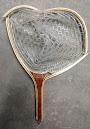
It hurts and it’s embarrassing but everybody takes a spill every now and then on the water. The dents and scar tissue in my shins are a testament to that. Whether it’s due to studs slipping on smooth rock, not having studs, not planting feet firmly in fast water, or a million other possible catastrophes, falls happen and there’s no shame in owning them, learning from them, and (if you’re like me) replacing nets because you fell on them and shattered them. And yes, I said “nets” because it’s happened more than once. 

I was once opposed to studs in my boots, thinking the grinding of metal on gravel would spook fish. I changed my tune, though, a few years ago on a below-freezing day when the lack of traction in a particularly fast current caused me to twist my ankle and fall in up to my neck. While hanging my waders upside-down from a tree to drain them, I made my decision to embrace studs. Since then I’ve been experimenting with different stud, spike, and aluminum bar combinations; I’ve found the Orvis PosiGrip studs to be my favorite, but really any small stud that doesn’t make me feel like I’m wearing platform shoes is a solid choice. However, even with the best studs, falls are still inevitable. After suffering a concussion ten years ago I have random moments when I lose my equilibrium and have to pause to get my bearings again, otherwise I’m going down. 

Being mindful of surroundings while being patient and deliberate with each step is always a good approach, but I find that making sure to always wade against the current and have one’s stationary foot firmly planted when taking a step with the other will greatly reduce those tumbles into the stream. 

Spooking Fish

There have been plenty of times when I’ve either seen feeding trout or come up to a particularly fishy section of water only to just completely spook anything that may have been there. Just last week I was stealthily creeping up to a favorite section of water while crouched and moving ever so slowly along a steep, rocky bank. Well, just as I planted my foot to make my first cast, I dislodged a rather large stone that slid down the bank and splashed violently into the water. A loud expletive later and I was moving on to the next spot.

Fishing small mountain streams for wild trout has taught me a lot about how not to spook fish, but it still happens. I’ve come across trout facing the opposite direction fifty-feet away only to spook them just by looking at them. However, fishing upstream, wearing drab clothing, approaching slowly and quietly (sometimes on hands and knees), only getting as close as is absolutely necessary, being mindful of water clarity and sunlight, and casting flies softly and accurately will help to reduce scaring off wary trout.

A final tip I’ll throw out in this area is to be subtle when removing flies from the water at the end of a drift. Many anglers just rip their flies out of the water and cast them back upstream, but if one waits until the end of the drift to slowly drag their rig over to the bank and then re-cast, they’ll spook fewer fish in the back end of a run.

Casting Into Trees

Almost as embarrassing as falling and just as inevitable is getting a fly stuck on a tree branch. Most often I find it happens when I’m over-excited about fishing a section and get sloppy, ultimately failing to notice the single branch hanging down over the run. There are plenty of other ways it happens, though, such as when trying to make a tight cast to the opposite bank and going just a few inches too far or hooking a branch on a back cast. However they occur, I’ve noticed they occur more in the colder months when there are no leaves on the trees and the individual branches are harder to see.

I’ve found that the best ways to reduce the frequency of sylvan snags is just to take a quick 360-degrees glance every time I set up in a new spot to be aware of your surroundings and then adjust my casting style accordingly, utilizing roll casts, bow-and-arrow casts, and water-loading as needed based on my surroundings.

Snagging

Snagging bottom is an inseparable part of nymphing and, to a slightly lesser extent, streamer fishing. Many times freeing a snag is just a matter of walking upstream a few steps and changing the angle of the rod, shifting the pressure and freeing the fly from whatever it’s stuck against, but sometimes it just has to be accepted that the fly (or flies) is gone. Every time I break off I find myself calculating not the cost of the fly, but the time it will take me to sit at the vise and re-tie it, which is a cost of its own kind. The only time I begrudgingly accept the idea of losing more than a few flies is when I nymph new water because I simply have no clue what’s down in those deeper pools unless I’m fishing it with someone else who possesses that knowledge.

There are occasions when I know the fly is hung up in less than two-feet of water and I’ll go get it. In these situations I keep moderate pressure applied with the rod tip and reel in as I step forward. Sometimes the snag will free itself before I’m even close enough to spook the fish and most times it will pop loose as the rod tip is directly over or just past the snag. Again, sometimes it’s just a matter of changing the angle of pressure. However, there are those rare times when just as my hand touches the water the fly comes free and the pressure from the rod tip slingshots it into an overhanging tree. The plethora of emotions the mind is capable of processing in a matter of seconds is astounding: first annoyance then elation, sheer horror, resignation, and finally defeat all in the blink of an eye.

If snagging feels like an all-too-ordinary aspect of one’s fly fishing experience, it may be time to think about the weight of the flies and shot being used. When nymphing, the goal is to achieve a natural drift with the point fly moving in the current just off the bottom while ticking bottom occasionally. If a nymph is dragging and dredging the stream bed completely, adjust the weight accordingly based on depth and current. Sometimes it may be necessary to alter a nymphing rig with each new section of water, but the results will usually be worth the effort.

No matter what, flies will be lost and one thing I’ve been working on is tying different knots to prevent breaking off entire rigs when one fly is snagged. On my Euro rig I use improved clinch knots on both ends of the tippet that goes from the sighter to my tippet ring. Then, when tying the point fly tippet and tag tippet to the ring I use triple Davy knots. Finally, when tying the tippet to the fly I use a double Davy knot. This combination has greatly helped to focus the breaking point on just the fly.

Fish Not Taking Flies

Even after avoiding all of the aforementioned calamities, sometimes fish just won’t take a fly for a number of reasons. 

While fishing dries and nymphs, drag on the fly’s drift is a common cause for fish turning away. Not only can there be numerous rates of flow between banks, but the rate of flow also varies from the bottom to the surface.  When dry fly fishing or indicator nymphing with line on the water, frequent mending is a necessity so the line on the water doesn’t get too far ahead of or behind the fly and causing it to drag unnaturally through the drift. When indicator nymphing, also try to keep both the flies and the indicator in the same current so the indicator doesn’t create drag. For this and many other reasons, I prefer Euro nymphing whenever possible, but even then it’s important to have the rod tip positioned so that the leader is as vertical as possible while maintaining a very slight amount of slack.

While I feel the previously mentioned elements of presentation are the most important factors, many times sunlight and water clarity play a significant part in a fish’s decision to pass up a fly. With the exception of specific hatches, my rule of thumb is typically this: the brighter the sun and the clearer the water, the smaller and more natural I’ll be leaning in my fly selection. The same goes for tippet. However, there is a belief in fly fishing that the fish has the final say and sometimes no matter how much work goes into presentation and fly selection, it’s just not going to happen and that’s okay.  

Missing Hooksets

I’ll admit I have a complex about setting on dry fly takes. Euro nymphing has made my reflexes too quick and I often set too fast on dries and ruin opportunities for myself by yanking the fly out of the side of the trout’s mouth before the fish has had a chance to go under with it. Also, Euro nymphing involves no mending whatsoever and sometimes that slips my mind on the rare occasions when I find myself dry fishing on bigger water (usually when I’m out West). 

One observation I had while both wading and drifting last summer in Wyoming and Idaho was that it’s much easier to set on a dry fly take from a drift boat than while wading. My position over the river rather than in it made mending easier and also made for a swifter upward motion of the rod tip leading the line to lift more smoothly from the water regardless of distance. 

While nymphing, whether it be with a sighter or an indicator, the general rule is to set on everything. Trout sets are light and it’s often possible to continue the drift after setting on a rock and freeing the fly. I’ve missed plenty of hooksets while pondering whether the sudden pause in my sighter was a rock or a fish because nymph takes can be so subtle. That subtlety is especially prevalent on the swing, which is why I always set at the absolute end of my drift, especially when using a stonefly, micro-streamer, or leech as my point fly.

Fishing streamers is a relatively new area for me, but I’ve found that most of my missed hooksets are due to territorial fish nipping at the tail of the streamer rather than aggressively attacking it. I’m still working out ways to prevent this (other than the obvious option of using articulated streamers) but on days when this has been a frequent occurrence I’ve found success by either going a size or two smaller with my streamer or by slowing down my presentation altogether. Again, I’m still working that out. 

Losing Fish

With a successful hookset there are no guarantees to landing a fish. So many things can go wrong and the longer the fight goes, the more opportunities a fish has to free itself from a fly. 

There’s a fine line betweening selecting gear appropriate for the flies being casted and for the fish being caught, and one should consider both in their rod selection. Battling a fish is exciting but having at least some control over it and minimizing the time spent fighting it will increase the chances of landing the fish as well as its likelihood of survival after release. That’s not to say that a trout should be yanked out of the water after it’s hooked, though. 

There are factors to consider such as current, tippet size, rod tip flexibility, and even hook strength when bringing fish in and any one of those can lead to a slack line and accompanying heartbreak. Also consider that with every application of pressure on the fish, the puncture wound in which the fly is buried becomes wider and wider. Most of my memorable defeats have come after fighting big trout in fast water only to work them into the slow stuff along the bank where the fly finally pops out as I’m preparing to net the fish. I’ve found that using side pressure whenever possible is one way to bring the fish in faster by keeping it near the bottom where it wants to be while still gaining line and bringing it closer in proximity.

When it comes to breaking fish off entirely, tip flexibility, tippet size, and knot strength are all crucial factors. There are times when a wise old trout will purposely swim into an undercut to saw tippet against a rock but most break-offs occur because of a rod tip being too stiff for the tippet size, the tippet being worn, or a knot failing because it either wasn’t tied right or just wasn’t the right knot. Taking a little extra time when setting up a rig will make a huge difference, as will checking it frequently. A few months ago I failed to notice a nick in my Euro leader and while fighting a brown trout, it broke in my fingers. By the time I realized what happened, I was watching the sighter fly through the eyelets and take off freely upstream as the trout swam away trailing 15-feet of leader. In a last gasp to not lose the fish, I ran to grab the leader but it went slack as the barbless hook fell out from the lack of pressure. 

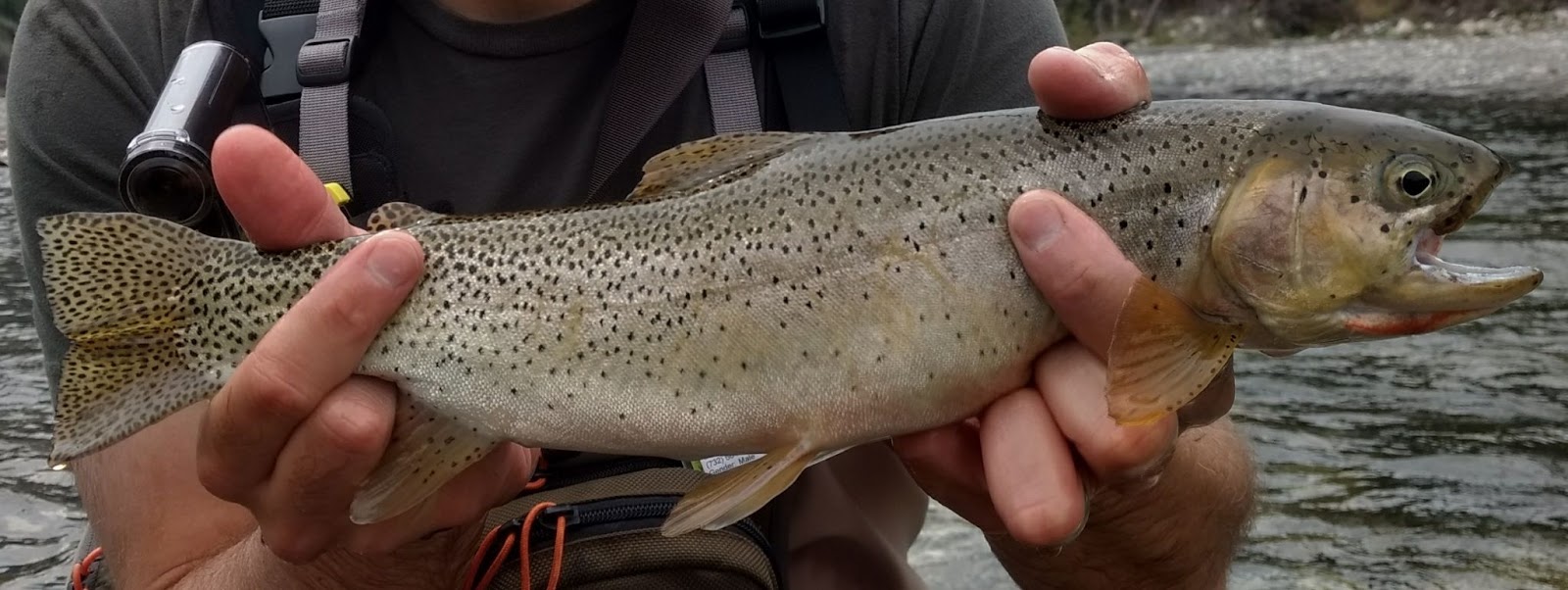
Finally, when everything falls into place and all that’s left is to scoop the fish into the net, there’s the bad net job. Most anglers have had friends come up short, leading to that day-making or even personal-best fish swimming away uncaught. In those moments it’s mostly just a matter of remembering the old “forgiveness is divine” adage. But when an angler is responsible for their own bad net job, it’s a time for self-reflection and learning. For instance, years ago I got over-excited while fighting a big cutthroat in Alberta and rejected my friend’s offer to net it. Not only did I underestimate how feisty those cutties could be, but I also rushed the net job, swiped at the fish before it was ready, and watched helplessly as it dodged the net and swam between my legs, breaking me off. Since then I’ve learned patience and always try to remember the two most important rules of netting fish: wait until it’s on the surface and net it head-first.

Final Thoughts

While it is possible to reduce the likelihood of all of the catastrophes highlighted in this piece, it’s not possible to eliminate them entirely. Therefore, welcome them as opportunities to learn, laugh at oneself, and become better as an angler. Even if I could eliminate the mistakes I wouldn’t; well, maybe I would eliminate some specific ones that linger to this day, but that’s it because the risk, uncertainty, and unpredictable nature of fly fishing are a large part of what makes it fun and exciting. The more prevalent the possibility of failure, the more rewarding and euphoric the success.    


Wednesday, November 3, 2021

Fly Fishing on a School Day?

 It was twenty-one years ago on a beautiful May morning of my sophomore year when I pedalled up late to school and found the staff ushering a massive line of students to the middle school across the street. Riding my Dyno BMX bike up to the line, I asked an acquaintance what was going on only to be met with two words: BOMB SCARE. 

Ugh...high school.
Since it wasn’t the first bomb threat in the school’s history, albeit the first I had experienced, I casually looked up at the sky and thought, “It’s a nice day. Makes sense.” Realizing this was likely either a senior prank or a group of kids seeking a beach day in the most idiotic way possible or even more likely both at the same time, my first impulse was to turn around and head home rather than spend the next few hours packed with my peers in the stuffy middle school gym. What stopped me was the realization that anyone absent, especially those absent without a parent phone call to back it up, would undoubtedly be placed amongst the usual suspects the next day. Therefore, I locked up my bike and joined the herd bound for the gymnasium where we would be held with nothing to occupy us until sufficient time had passed for the district to be legally credited for the school day, thus preventing an additional day being added to the end of the year. 

Sometime around noon the gym doors flew open and a mass of hormones and solipsism poured out into the sleepy town of Point Pleasant, New Jersey. My friends and I, six in total, were ravenous and made for what only starving teenagers with unrefined palates would make for: Pizza Hut. We actually dined in. I remember it vividly for two reasons, one of which being it was the first time I had eaten at a restaurant solely with friends and no parents in sight. I didn’t merely feel like a man but rather more like a king----eating at Pizza Hut. It must have been how Gorbachev felt a few years before when he filmed that Pizza Hut commercial (Look it up; it actually happened.).

The second reason this experience stuck with me was because of our server who, realizing her next table would be a group of uncouth and poor-tipping teenage boys while simultaneously seeing right through how cool we thought we were, decided not to steer the logical course of ignoring us as much as possible and instead confidently walked up to our table, opened with a “Look at what we have here,” and proceeded to roast each of us one after the other with an unrestrained, Don Rickles-like efficacy still unsurpassed to this day and we loved every second of it. I can’t remember what she said about me but I’m sure it was spot-on and well deserved. 

By the end of our meal we had made a new friend (whom we tipped generously) and upon leaving the restaurant with plenty of time left in the day, all of us agreed on the only sensible thing to do with a volatile mix of what passed for pizza and breadsticks churning in our stomachs: trek all the way to the opposite side of town and fish the nearest excuse for a freshwater fishery. That fishery was Godfrey Lake, an egregious misnomer given that this “lake” was no larger than a football field and no deeper than a motel swimming pool. 

The angling experience among the group ranged from zero to thinks-they’re-hot-shit with my friend Bill and I being the latter. Since most of the group was ill-equipped, we stopped at both mine and Bill’s houses along the way to gear up. At this point I was barely two years into my fly fishing journey, fifteen years away from discovering trout, and still yet to do more than bring a fly rod as a back-up to spin and casting gear, so when I passed out my two best bass fishing rods and was left with only an Ugly Stik spinning combo and my 3-weight Cabela’s fly rod, I was a bit apprehensive to leave with only the 3-weight. In a moment of extreme conflict, I decided to take a chance. Looking back on it, I honestly think the determining factor of an important moment in my fly fishing journey was more of a repugnance towards the Ugly Stik than any particular desire to fly fish that day.

When the six of us arrived at the so-called lake we set up at a sandy stretch of bank where the first lesson Bill and I had to immediately teach our eager but inexperienced crew was to refrain from putting the rods down in the sand. We then provided a tutorial for the two who had never fished, partly so they would have fun but mostly so they wouldn’t break our rods and lose our lures. 

With proper handling and release,
 as with everything in life,
you live and you learn.
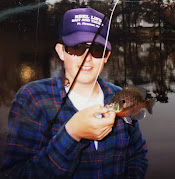
When I was finally free I took out a fly box containing some Adams, Elk Hair Caddis, and hoppers I had picked up for panfish and small bass. After making my first cast I was intently watching the Caddis float on the surface while explaining to a friend why I had just “waved the rod back and forth” when what ended up being a personal-best crappie crushed the fly up top as it was being pushed slowly across the surface by the breeze. Up to this point, none of my friends’ jerkbaits or soft plastics had attracted the attention of a bass or pickerel, so the crappie was the first action we had; it was a big deal for a moment but was quickly dismissed as a fluke until the next cast brought in a slab bluegill followed by a few more bluegill and another crappie shortly after with the action only halting for the occasional warning of the dangers of standing in proximity of my back cast.

After landing about a dozen fish, I spent the rest of the day casting and then handing my 3-weight over to one of the others who were taking turns so they could all set the hook and bring in some panfish. Bill was the only one who stuck with what he was doing, not out of stubbornness but because he (a beginning fly fisherman like I was) had already experienced what they were enjoying and was having fun just watching them. Nobody was ripping lunker bass through the lily pads with my Cabela’s combo, but everyone was catching fish and having a great time.

Probably one of
my first fish
on the fly rod.
The day was memorable for a number of reasons: “surviving” a bomb scare, the unforeseen early dismissal, the bizarre Pizza Hut adventure, and a great time on the water. What stuck with me most, though, was the sense of pride I felt towards a skill I was in the beginning stages of developing as well as the realization that if I put my faith in fly fishing it would reward me in ways I never thought possible. After more than twenty years, what had been a reluctant gamble by an ignorant teenager low on gear still pays off every time I’m on the water and I predict it will continue to do so for the rest of my days.  


Friday, August 20, 2021

Travel and Fly Fishing

 At my age (36) people around me place tremendous importance on two things: children and property. By choice, my wife and I have neither. Oftentimes, whether intentional or not, those closest to us tend to diminish and devalue our time, experiences, and the very nature of our existence because we haven't created life and don't own a small, rectangular patch of land with a house on it. Occasionally they even have the nerve to pity us. In these moments I often think of the fly fishing adventures I've had while travelling over the past five years as well as the first line of Rutger Hauer's unforgettable monologue in Ridley Scott's Blade Runner: 

In reality, the standard 2.5 kids and the house with the white picket fence just aren't part of the plan for everyone. For some it's not practical and others just don't want it; in our case, it's basically both. 

Upon our return to New Jersey after graduating from college we were met with a budding recession, Chris Christie's war on educators, and my shitty family, all of which led to personal, financial, and career struggles that took years to climb out from under. 

It took about 8 years to be relatively free from those issues and after having lost over a decade of our youth to college, career setbacks, crippling financial stress, and my family's bullshit, we chose a life of adventure and exploration within our means rather than shackling ourselves to the perceived ideals for which society said we should strive. 

Everyone's path is different and we've chosen to live unapologetically on our own terms, doing exactly what we want to do with the time, energy, and youth we have left and I refuse to let anyone tell me that my life has less meaning and value because I don't have kids. It can sometimes be lonely, but I'm proud that we found our own path rather than mistakenly and futilely trying to conform to others' ideals because it would have been just another case of the square peg in a round hole scenario. 

For the remainder of this post, I want to highlight some of my favorite fly fishing adventures from our travels over the past five years as a way of reinforcing that you don't have to live up to anyone else's expectations and goals to find happiness and meaning in life. 

Kananaskis Country, Alberta, Canada (August 2016)

After making an exhausting late-afternoon hike up a mountain to reach this gorgeous lake on our first trip to Alberta, I was greeted with a killer caddis hatch and rising cutties everywhere. Watching my first cutthroat trout come up and sip my caddis off the surface is such a cherished memory for me.

In and Around Calgary, Alberta (August 2017) 

My first trip fishing with my good friend, Todd, from Calgary featured a crazy, unplanned all-nighter spent hopping around multiple sections of two rivers including the Bow in Calgary, chasing bulls, browns, and rainbows with streamers. I didn't land anything big that night, but I did fall on my net and shatter it and I was able to get back to the Airbnb to get 30-minutes sleep before a planned hike with my wife.

Great Smoky Mountain National Park, Tennessee (August 2018) 

My first-ever native brook trout were caught during a trip to the Smokies in Tennessee in August 2018. Because of the water temps, I stuck to small, freezing cold mountain streams within the park having a blast catching native brooks and wild rainbows on dries that whole week.

George Washington National Forest, Virginia (April 2019)

This trip to Virginia taught me so much about the difference in recovery time of lowland streams and mountain streams. The last few hours of the evening drive there were spent navigating through torrential rain and the next morning I found that the creek I had planned to fish was pure chocolate milk. Instead of giving up, we went to Murray's Fly Shop in Edinburg where I was taken over to a contour map and shown a blue line in George Washington National Forest that may have had enough time to recover. What I found was a pristine small stream loaded with aggressive native brooks that I had a blast catching for hours while nymphing with my then-new 2wt glass rod.

Bow River, Calgary, Alberta, Canada (August 2019) 

For my third trip to Alberta, Todd gave me VIP treatment and not only took me to fish water that most visitors to the area never even hear about, but he also introduced me to some of my favorite people I've met in fly fishing: bull trout expert Jon, all-around great angler Lem, and guide and streamer-master Brett, the latter of which we spent the day with on his drift boat, floating the Bow River through Calgary. It was my first time on a drift boat and one of my favorite fly fishing experiences.

Old Man River, Alberta, Canada (August 2019) 

The events of August 16, 2019 on the Old Man River were such an important part of my experience as an angler that I wrote about it in a previous piece, titled Old Man

Adirondack Mountains, New York (October 2018, 2019, 2020, etc.)

Some of our trips are just short weekend road trips, like our annual October visits to upstate NY, and I don't always have a ton of time to fish and sometimes the conditions aren't ideal when we're there. On our trip in 2019, I had three hours to fish and chose a section of river near the cabin that had easy access, but mostly held stocked fish. Aside from this day, I haven't specifically targeted stocked trout in roughly four years, but boy did I have fun crushing stockies in the few hours I had, beginning with a 20" rainbow on the first drift with my girdle bug.

White Mountains, New Hampshire (September 2020) 

Sometimes it's hard to plan in advance your approach to fishing new water far from home, so you have to be flexible. On our trip to New Hampshire in September of 2020, I rigged up my 2wt glass rod at the Crosstrek to nymph a small brookie stream and as I was walking through some high grass I realized I was surrounded by hoppers. An hour and a quick rig change later and I was having the most explosive surface action I'd had in years with ferocious brookies literally torpedoing themselves out of the water to take my hopper.

Green Mountains, Vermont (July 2021) 

Many times, travelling affords me the opportunity to meet awesome people in person who I had previously only interacted with through this Instagram account. Last month I had the pleasure of meeting up with Aaron of Crooked Feather Outfitters to fish a river in Vermont during a weekend trip to Manchester and though we didn't get into many fish, it was great hanging out with and learning from a great angler and person like Aaron.


Pocono Mountains, Pennsylvania (July 2021) 

During a weekend trip to the Poconos in PA to visit my wife's family visiting from Florida, I woke up at sunrise the first morning and snuck out to the blue line in the backyard. Unable to find anything online about the stream I had no expectations and was so pleasantly surprised to land one of the biggest and most colorful native brookies I've ever landed among others on a dry-dropper rig.


Teton County, Idaho (August 2021)

My trip on the drift boat of Will of WorldCast Anglers two Saturdays ago was the most successful, action-packed day I've had in my 6+ years of fly fishing for trout and one I will never forget after catching a mix of more than 35 trout, mostly browns and cutties with a few cutbows and rainbows mixed in (The South Fork Slam) and even a surprise whitefish. The day started by twitching foam stones up top and later in the morning shifted to a hopper-dropper rig. Plenty of action up top and below with powerful wild trout smashing or sinking foam and screaming off line while making big runs and swimming circles around the drift boat. Some milestones hit today: first trout in Idaho, first ever cutbows, PB cuttie, most trout in a day, biggest brown of 2021 (so far), most species of trout caught in a day.


Grand Teton National Park, Wyoming (August 2021)

Two days after topping my personal-best cuttie a few times on the drift boat, I landed this beautiful, hard-fighting, new personal-best cuttie in sight of the beautiful Grand Teton range in Wyoming. I missed it on the first take but saw it flash and knew it was big then hooked it on the next drift, stopped it from hanging me up numerous times, and finally landed it.


Pennsylvania (2018-Current)

Even though these trout aren't from overnight trips or long vacations, I'm always excited for each day trip to PA in the Crosstrek. I've landed so many of my favorite trout there over the past three years since I made the decision to focus on what in my opinion is the best state for trout East of the Rockies. I've landed trout on eleven different streams in the Keystone State and that isn't even a fraction of the amazing streams that PA has to offer.

Final Thoughts

We only get one shot at this. Life, that is. Beware of the influence of structures and constructs such as family, religion, government, and society and find your own raison d'ĂȘtre (reason for being) through adventure and experience.

"Your future is whatever you make it, so make it a good one." -Dr. Emmett Brown

Thursday, August 19, 2021

Old Man

 “Don’t worry about them. They won’t bother us,” remarked Todd, a native Albertan and a good friend who didn’t even need to look away from the nymphing rig he was tying to know I was a little uneasy about the free-range cattle that were inching closer to us as we were setting up alongside his Tacoma. One cow in particular, large and jet-black, was ahead of the rest and aggressively mooing at us every thirty seconds, its ear tag dangling in the wind, bringing back a memory of my previous visit to Alberta. 

Two years prior, as Todd and I were crossing pasture land (with permission, of course) a small drove of cattle began to form circular ranks, pushing their young to the inside as we passed. I asked Todd what they were up to and he coolly remarked, “They’re getting in a defensive position. They probably think we’re bears.” 

The moo of the jet-black cow brought me back to the present and after a few more minutes of its clockwork bellowing, Todd set his rod against the tailgate, walked to within ten-feet of the beast and casually said, “Shoo. No treats for you.”

The cow didn’t budge, Todd shrugged his shoulders, and we went back to work. In the few minutes we were setting up the clouds had rolled in and the wind picked up, blowing flies and tippet across the tailgate. Everything portended rain and I thought about my rain jacket balled up in a suitcase back at the AirBnB, which was no less than a hundred miles away at this point. 

“My third trip to Alberta and I still haven’t learned my lesson about the unpredictable nature of mountain weather,” I thought. I hadn’t seen the AirBnB, a shower, a fresh change of clothes, or a tooth brush in about thirty-six hours, having slept the previous night on Todd’s couch after a day of drifting the Bow River followed by an early evening of hiking for bull trout in Kananaskis Country. At this point, we were at our second river of the day and the fifth river in the past two days with a stillwater dry fly outing planned for the following morning.

Todd sensed rain as well and proceeded to rummage around in the back seat of the pickup, finding two rain jackets. He then came over to my side of the truck and handed one to me, warning that it had seen a few thorns and branches in its time and might not be entirely waterproof. It was better than nothing and I thanked him as I put it on. The rain began as we locked up the truck; it was one of those sideways rains carried by the wind.

When we walked downhill to the water I thought about how fitting it was that we were fishing the Old Man River. Having severely lacerated my foot in a shark fishing mishap the month before, I was walking slowly with a limp, still favoring my left foot. Also, the previous day’s adventures had left Todd with a sore hip that slowed him down and left me with slices in both heels from brand-new wet-wading shoes the manufacturer insisted could be worn without socks and which I had no choice but to wear again to the Old Man. As we approached the river I saw it was a fast-moving, fairly wide section of water with numerous drop-offs into deep pools intermingled with large rock structure throughout. The bank from which we approached had a manageable incline, but the opposite bank was a steep cliff wall at least a hundred-feet high where the river had cut through the rolling hillside as it went down along a wide bend.

The particular section of the Old Man we were fishing held mostly cutthroat and bull trout, so we each carried a nymphing rod but Todd also brought an 8-weight rigged with a heavy streamer for the sections that looked good for bulls. Todd got into a few cutties quickly while I was still trying to shake off the skunk from the previous evening’s hike for bull trout and our early morning small-stream cutthroat session, during which I missed a few takes on a hopper. After about an hour with no action I had to remind myself that this was Todd’s home water and I was fishing out of my comfort zone with my 9-foot 5-weight and an indicator rig instead of my usual 10-foot 3-weight Euro setup. 

After another hour of alternating between nymphing for cutties and chucking streamers for bulls with only a quick follow from a wary bull trout, Todd decided we needed to change things up and suggested we walk downstream to a point where we could cross the river and then work our way upstream along the cliff wall to fish a deep section he knew of with multiple ledges: prime bull trout water. 

As we walked downstream and crossed the river, the wind and rain picked up. When we reached the cliff wall on the opposite bank Todd said we had to climb about twenty-feet up from the river and he pointed to a ledge that jutted out from the wall where we could stand and walk for a distance to get to the next fishable section. 

Todd led the way and when we came to the ledge it was clear that both hands were needed, so he passed me his rods, climbed up, and then took all three rods so I could also climb up unhindered. After handing off the fly rods I reached up, placed both hands on the ledge, and firmly planted my right foot on a small chunk of protruding stone to push up to the ledge. Shortly after putting all of my weight on the foothold, it crumbled and fell out from under me. At that point I had my elbows and hands firmly planted on the ledge and the instant I felt the weightlessness under my feet I used the momentum from the initial swing of my dangling legs to push up using only my upper-body strength. While struggling up I felt a pop and a tear in my left shoulder and before sliding down to what would have likely been a non-fatal but definitely vacation-ending fall, Todd grabbed me under the arm and hoisted me up the rest of the way. 

Hunched over on the ledge, I quickly felt my shoulder pop back into place. With the tearing sensation fresh in my mind and the pain still very acute, my first words were, “I just messed up my casting arm,” even before thanking Todd for saving me. Without another thought of what had just happened I held my 5-weight and went through casting motions to make sure my arm could still function by keeping my shoulder stationary, using only my wrist and forearm to cast. After a few successful attempts to assure myself, we were ready to move on. 

As we walked along the ledge, Todd remarked that most of the cliff wall was sandstone and I shouldn’t have put all of my weight on it, especially in the rain. He followed it with “I guess I should have mentioned that beforehand.” I just laughed and continued on as the wind and rain relentlessly beat at us. 

When we approached the point of the ledge where we could proceed down to the water, a sizable chunk of the sandstone cliff wall crumbled and crashed into the river about thirty yards behind us. At that moment I looked directly up at the outward-jutting wall looming over our heads, resigning myself to the possibility that it could be lights-out at any time. 

We both laboriously re-entered the river and Todd handed me the 8-weight, pointed to the underwater ledge, and instructed me on fly placement and presentation for this particular spot. After a few casts the pain in my shoulder was spreading to my forearm and wrist and I had to hand the rod over, telling Todd to have a go at the bull trout we knew were in there. On his first cast he coaxed a colorful bull out from under the ledge but it wouldn’t take the streamer. As the fly hit the water on his next cast, another chunk of sandstone crumbled and crashed into the river, much closer than the previous one. I also noticed that the rain was becoming more intense and had soaked through my jacket, causing me to shiver with each cold gust of wind.

As I stood there clutching the nymphing rods in intense pain from shoulder-to-foot, soaked and shivering from the rain and the wind, and watching Todd bomb out casts into the deep pool while clearly favoring his hip, a thought entered my mind: “We’re insane and we’re probably going to die doing this someday.”

For some that might be a wake-up call to step back, think about their priorities, re-assess the role fly fishing plays in their lives, and take it slower and easier going forward, but that’s just not me. In that moment a beaming grin shaped itself in spite of my stoic, weather-beaten facade and a single tear, imperceptible in the rain, ran down my cheek, with both stemming from the overwhelming joy I felt at having found something in life I loved so unconditionally and with so much passion that nothing would ever stop me from doing it to the fullest. While I didn’t land a single trout and my shoulder was left in significantly bad shape for a few months, I consider it one of my most successful days on the water in that it tested my commitment and resolve to pursue what I love in life with the assurance that if I remain committed to fly fishing it will continue to inspire, motivate, and heal me for as long as I can do it. Accompanying my joy at having fly fishing in my life was a sense of sympathy for those who don’t have something that, as a great woman has described it, sets their soul on fire. However, where there is joy and sympathy in the world, there is always hope that they too will find their way.


The Secret of Life and How I Figured It Out

“Do you know what the secret of life is? One thing, just one thing. You stick to that and everything else don’t mean shit.” Curly, the fictional cowboy who uttered this cryptic statement in the 1991 film City Slickers also implied that the “one thing” is specifically tied to the individual and the act of finding it is an act of self-discovery. Many can’t be bothered with it, some misinterpret it, others are afraid of it, a few are lucky enough to find it before it’s too late, and then there’s me: I found it at the age of thirteen and it took nearly twenty years and plenty of emotional mileage to realize it.  

Growing up at the Jersey Shore, I was exposed to both freshwater and saltwater fishing at a young age and by eleven, if I wasn’t fishing I was watching fishing shows. Occasionally, one of them would deviate from bass angling to focus on fly fishing, a concept so alien to me that I couldn’t make sense of it no matter how many clips I watched. Not only did the technique go against everything I thought I knew about fishing, but the scenery around it was infinitely distant from that of my small beach community and felt inaccessible to one such as myself from a lower class upbringing. Even though I couldn’t comprehend fly fishing, I wanted to try it.

Bob Popovics and I, circa 2017
Through a family connection, local saltwater fly fishing legend Bob Popovics learned of my interest and generously introduced me to his saltwater fly fishing club, taught me the basics of casting and presenting saltwater streamers, and gave me a large plastic tub filled with tying supplies, including a new Renzetti vise, the only vise I’ve ever owned. With Christmas and birthday money I scored a functional 3-weight Cabela’s combo and a 9-weight Fenwick HMG. Other odds and ends were acquired, some bass fishing tools were repurposed, and I was ready to dive in. Initially it was a solo effort casting dries for panfish and streamers for largemouth in local ponds, but I soon found friends who practiced inshore saltwater fly fishing and for years we rode our bikes all over town in search of striped bass and bluefish.

By twenty, the demands of adult life took hold and I was overcome with a fear of failure, of ending up like much of my family: unfulfilled and miserable. This drove me to devote myself entirely to education and career pursuits. I was working full-time through college and after graduating balanced no less than two jobs to survive while establishing my career. From the ages of twenty-one to twenty-nine, fly fishing was out of my life in exchange for an inordinate workload of which I could never seem to stay ahead. After years of letting my profession take me over completely, my worst fears were realized: the life I was leading was unfulfilling and I was miserable. While the positive impact I made professionally was unprecedented, I had sacrificed myself entirely to that success and my reward was being let go by superiors who didn’t value my devotion and sacrifices above the bottom line. To compound my situation, the experience left me severely depressed. I no longer had a sense of self or any identity that wasn’t tied to my career and I didn’t even value my own existence.  

I soon found comparable employment but I was barely holding it together. Upon realizing I couldn’t go on like this anymore, I thought of what once made me happy and immediately realized how much I missed fly fishing. Around this time, my girlfriend proposed that we purchase a tandem kayak to spend more time in Nature and that summer I paddled and casted for largemouth as often as possible. I was enjoying my reunion with the sport I loved so much, but still something was missing. The following Spring, I overheard two colleagues in the breakroom discussing fly fishing for trout in a Northern New Jersey stream. Growing up at the shore, my only experience with trout involved casting mealworms for hatchery fish in tiny, muddy creeks smothered in dense foliage, the antithesis of the sprawling Western rivers in those old fly fishing clips. I was doubtful that it was even possible to fly fish for trout in New Jersey, but I wanted to try and decided to head North that Saturday morning, May 9th, 2015. 

At dawn I rigged up my nearly twenty-year-old 3-weight setup with an olive Woolly Bugger and hit the road. When I arrived, the stream was packed with anglers and vehicles. What I didn’t know was that this particular stream was the most popular, heavily pressured trout stream in the state and I chose to fish it on a weekend at peak season. Today you couldn’t pay me to fish elbow-to-elbow for stocked trout, but that day I was in heaven. Driving along the stream, I was stunned at the water clarity and pristine surroundings, so unlike the muddy, narrow creeks I had fished near home. It looked like one of the fly fishing segments I had watched long ago, but still maintained a distinctly Jersey feel. Finding water like this in my home state was beyond anything I could have hoped for and a sense of the day’s importance was palpable. I miraculously found parking and put on my ancient, ill-fitting rubber waders, strapped on an old wooden trout net, grabbed my 3-weight, and hit the trail. Personally, I despise elitism, especially in fly fishing, and believe one doesn’t need the best gear to be successful, but I can also be self-deprecating and acknowledge that I looked just as clueless as I was.

Years of fly fishing had taught me to keep my distance from other anglers and it took a while to find an unoccupied section; after walking nearly a mile I discovered a spot where the presence of two massive, car-sized boulders forced the water into three separate runs: one running in-between the boulders and two to the outside. The run I chose along the near bank was slow and short, dumping into a deep, wide pool. Of course, I did everything wrong on my approach. Instead of coming from downstream and working the tail first, I came from upstream scrambling down an incline overlooking the pool, knocking pebbles in the water, and positioning myself alongside the middle of the pool. I casted diagonally into the head, letting the Bugger sink for a few seconds before stripping it in. As the fly came back into sight, an eighteen-inch hen stocked rainbow came out of nowhere and crushed it. Immediately the rod went into full-bend and I was acutely aware that I was living what I’d once deemed an impossibility. Remembering that child watching TV on his mother’s couch and receiving brief glimpses of a world out of his sphere, hooking this trout changed everything; I had found my “one thing.” 

The stocked rainbow
that started it all...
After a prolonged fight, during which the stocked rainbow used its limited battle experience to repeatedly make for the deep water of the pool, I was able to turn it into the net and a passerby snapped a quick photo before release. For the rest of the day I worked that Woolly Bugger in every unoccupied pocket, run, and pool. While I only landed two more rainbows, I had aggressive action in almost every section and I was beaming. I met friendly, helpful anglers on the trail, shared my story, and listened eagerly to any tips they sent my way. That afternoon I went home feeling reinvigorated with a new-found appetite for learning I hadn’t experienced in years. Without realizing it, fly fishing for trout had become my religion.

  Once so weighed down by life I could hardly get off the couch, I wouldn’t have recognized myself in who I’ve become and owe everything to one stocked rainbow. Over the past six years I’ve travelled extensively for trout, viewing life as one fly fishing adventure after another, whether it be catching brookies on foam hoppers in New Hampshire or Euro nymphing streams for wild browns in Pennsylvania. I’ve climbed mountain trails in Alberta to chuck big caddis on glacial lakes for cutties, drifted dry-droppers for wild browns and rainbows on spring-fed New Jersey creeks, short-line nymphed native brookies out of mountain streams in Tennessee and Virginia, indicator nymphed and streamer-fished the Bow River through Calgary on a drift boat for browns, and those are only a few adventures out of hundreds in other states and provinces, with each experience being special for its challenges, rewards, lessons, and most importantly the friendships made on the water with like-minded anglers all over North America.   

Since May 9th, 2015, I’ve been happy. Yes, life is far from perfect but I’m much better equipped to navigate the rougher waters after having found my one thing. I now recognize that what I do for a living doesn’t carry with it any existential truth, but simply provides a means for me to pursue those truths in Nature. Genuine fulfillment for me was never found sitting at a desk, typing on a computer, or nodding off in a meeting; it’s in clear streams deep in the forests up in the mountains where I’m more likely to come across a bear than someone sipping coffee and making small-talk about the weather. I still work just as hard as ever and take pride in my career accomplishments, but now the little things that once gnawed away at me and had seemingly world-ending potential just “don’t mean shit” when compared to the beauty of a wild brown nymphed out of a spring-fed mountain stream.